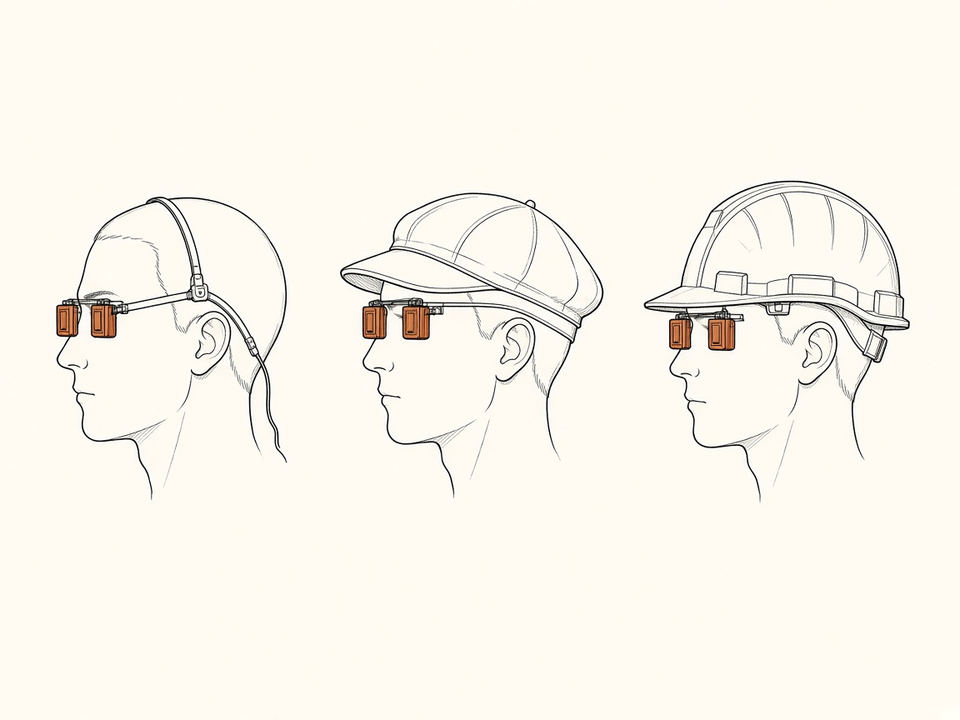
Headset, cap, hard hat
A stereo pair, about the spacing of two eyes, sits on a headset, in the brim of a cap, or under the brim of a hard hat. The head is moving. Global shutter keeps the doorway from shearing.
GS2.3 · Samples November 2026 · Delivery March 2027
1920 × 1200, 3.0 µm, 120 fps. One exposure per frame. Mono or RGB. Cameras share one frame-sync pulse.
The extended datasheet is available on request. Write for it.
1920 × 1200, 3.0 µm, 120 fps.
68.6 dB. 7300 e⁻. 2.6 e⁻.
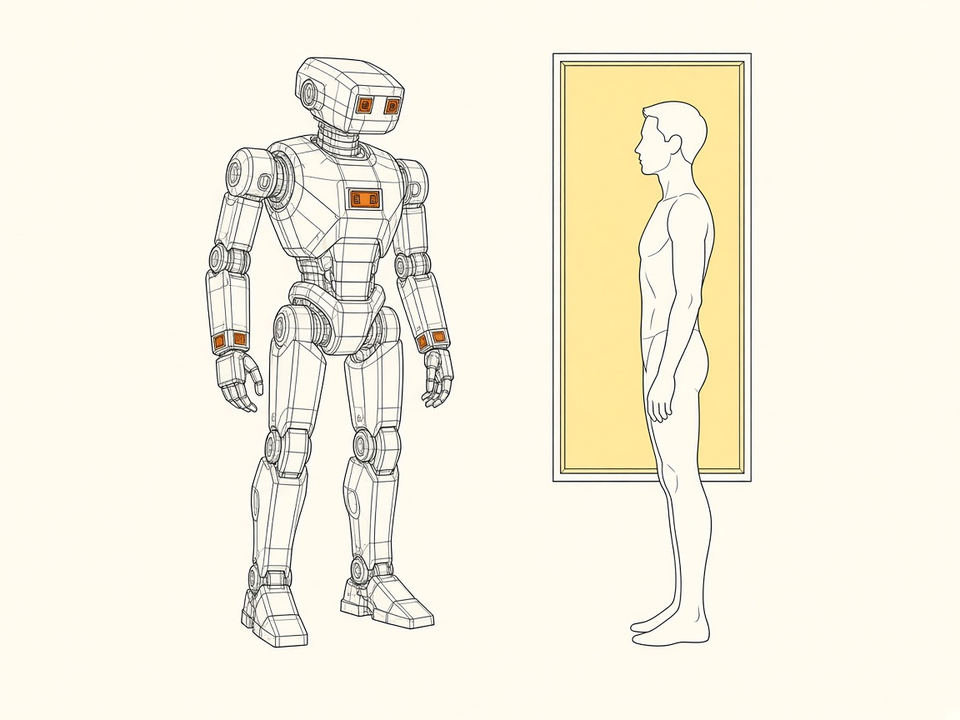
A humanoid uses more than one camera. The head watches the person, the chest watches the floor, and the wrists watch the grasp. Those cameras share one global shutter and one frame-sync pulse, so the hand in the wrist picture is the hand in the head picture.
One sensor drives the pulse. The others follow it. Exposure equals the pulse width, and the pulse lasts at least one line.
A stereo pair, about the spacing of two eyes, sits on a headset, in the brim of a cap, or under the brim of a hard hat. The head is moving. Global shutter keeps the doorway from shearing.
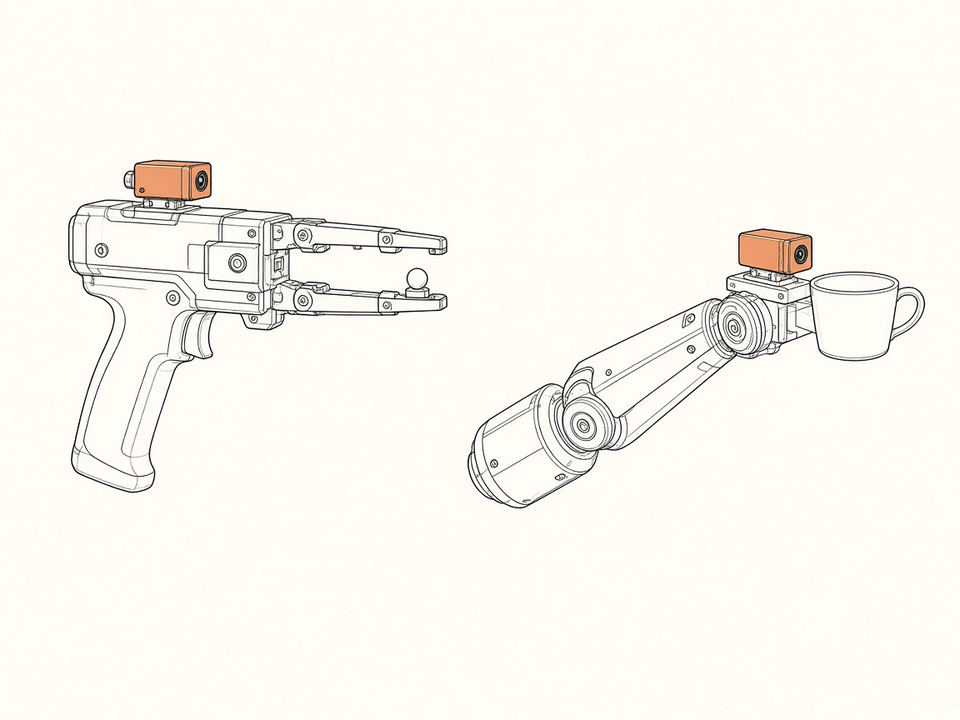
One way to show a robot a grasp is to do the grasp, with a camera looking along the fingers. Metal, plastic and a lamp sit in one frame, a few centimetres away. The same shutter then goes on the wrist that repeats the grasp.
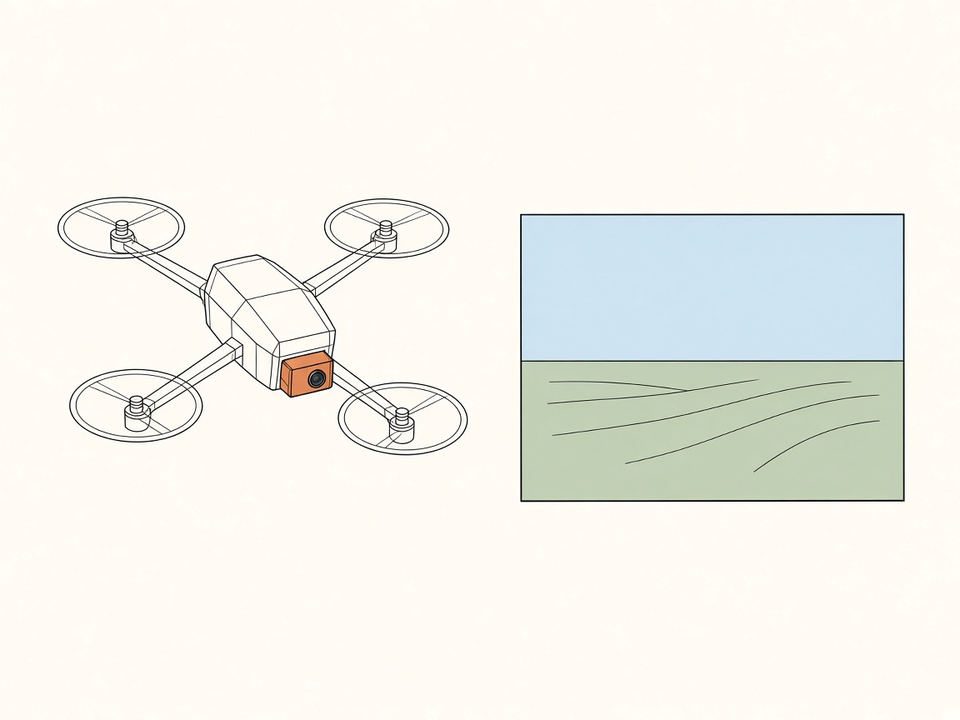
Sky at the top of the frame and ground at the bottom. The vehicle is what moves, so the shutter has to be global and the frame rate has to stay up.
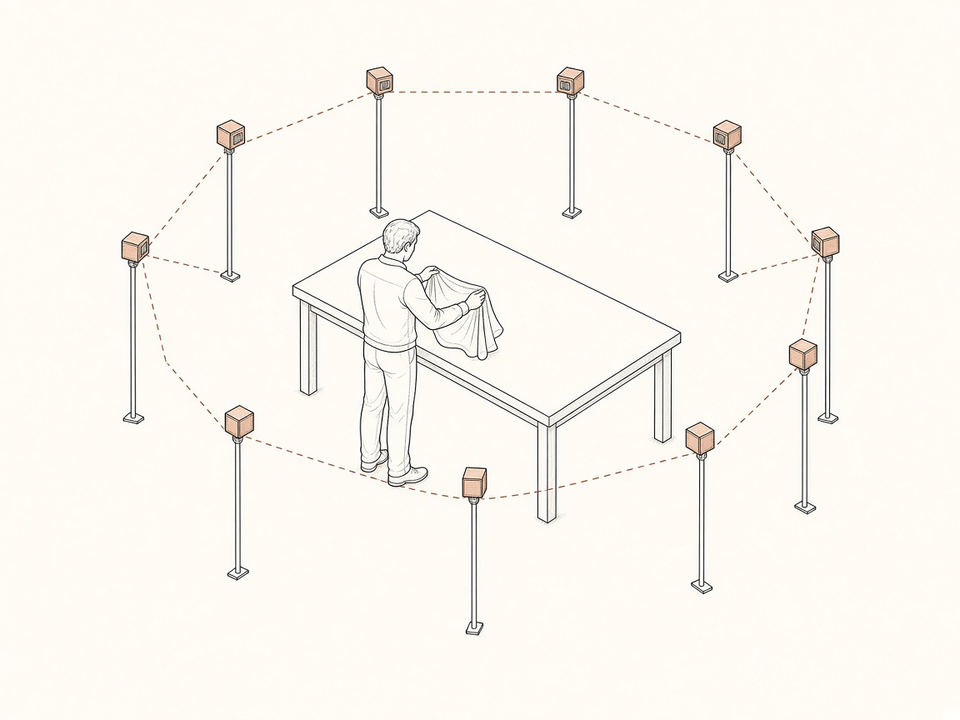
Cameras on stands record a person at a bench. The take is usable when every camera saw the cloth leave the hand on the same pulse.
RGB keeps the colour of the lamp. The mono version is there when the work is in near-infrared.
GS2.3 44.6%. SC233HGS 19.9%.
GS2.3 24.9%. SC233HGS 9.38%.
Same pixel, same array, same optical format, same chief ray. Our measurement, side by side. The better figure in each row is in bold, including the rows SC233HGS wins.
| GS2.3 | SC233HGS | |
|---|---|---|
| Dynamic range | 68.6 dB | 65.7 dB |
| SNR max | 38.6 dB | 37.7 dB |
| Full well | 7300 e⁻ | 6050 e⁻ |
| Read noise, 16× gain | 2.6 e⁻ | 3.13 e⁻ |
| QE at 850 nm | 44.6% | 19.9% |
| QE at 940 nm | 24.9% | 9.38% |
| SNR, 50 lux, 8× | 26.1 dB | 23.5 dB |
| SNR, 940 nm, 4× | 29.2 dB | 24.1 dB |
| Gray card, 20 lux, 80 °C | 18.8 dB | 16.5 dB |
| Dark current, 60 °C | 60 e⁻/s | 25.7 e⁻/s |
| DSNU, 60 °C | 17 e⁻/s | 8.1 e⁻/s |
| Power, 25 °C, 1×, dark | 321 mW | 285 mW |
Published figures. AR0234 is end of life. SC233HGS dynamic range is the published linear figure, 62.65 dB. The published knee figure is 92.65 dB. The table above is the side-by-side measurement.
| Sensor | Status | Pixel | Array | Dynamic range | Frame rate | Interface |
|---|---|---|---|---|---|---|
| GS2.3 | Samples November 2026. Delivery March 2027. | 3.0 µm | 1920 × 1200 | 68.6 dB | 120 fps | MIPI |
| SC233HGS | Supply chain problems | 3.0 µm | 1920 × 1200 | 62.65 dB | 120 fps | MIPI, LVDS, DVP |
| AR0234 | End of life | 3.0 µm | 1920 × 1200 | 71.4 dB | 120 fps | MIPI, parallel |
| AR0235 | Supply chain problems | 2.8 µm | 1920 × 1200 | 65.3 dB | 120 fps | MIPI |
| Mira220 | 2.79 µm | 1600 × 1400 | 63.7 dB | 90 fps | MIPI | |
| OG02C10 | Supply chain problems | 3.45 µm | 1632 × 1264 | 300 fps at 8-bit | MIPI, LVDS | |
| IMX392 | Supply chain problems | 3.45 µm | 1920 × 1200 | 167 fps at 10-bit | Sub-LVDS |
November 2026
Samples, by the piece. 45 USD, shipping excluded.
March 2027
Delivery. Packages of 240. Minimum order 480. 9.50 USD per sensor.
The sample works on a Raspberry Pi 5 and a Luckfox Aura, in partnership with Camemake.
Shipping is 35 USD per order.
Go to the shopPackage is CSP, 8.02 mm × 5.40 mm. Operating junction temperature is −30 °C to 85 °C.
The next sensor stays on the same robot cameras, and on one exposure, so the frame rate stays up when the scene needs more dynamic range.
Seed funding opportunity, $6 million, is for that step. Write about the round