The same on paper
Both parts are 2.3 megapixel global shutters for the same cameras. The starting points are identical.
| GS2.3 | SC233HGS | |
|---|---|---|
| Image | 1920 × 1200 | 1920 × 1200 |
| Pixel | 3.0 µm | 3.0 µm |
| Optical format | 1/2.6 inch | 1/2.6 inch |
| Chief ray | 15° | 15° |
| Conversion gain, 10-bit | 0.169 DN/e⁻ | 0.169 DN/e⁻ |
| Output | 10-bit | 10-bit |
| SNR max | 38.6 dB | 37.7 dB |
SNR max is our bench measurement of both parts, not a datasheet figure.
Colour checker, 400 to 50 lux
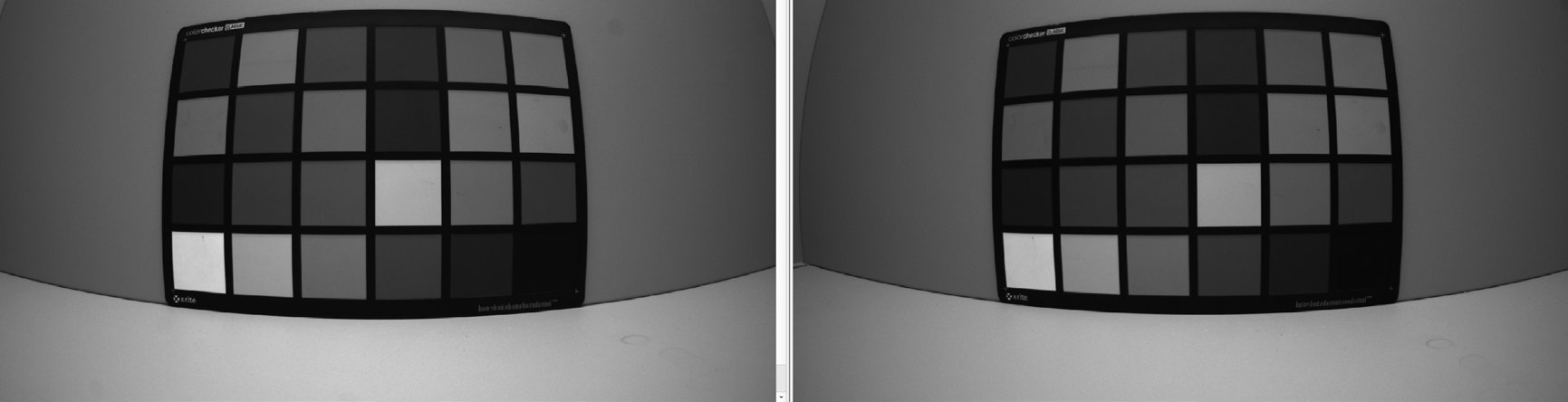
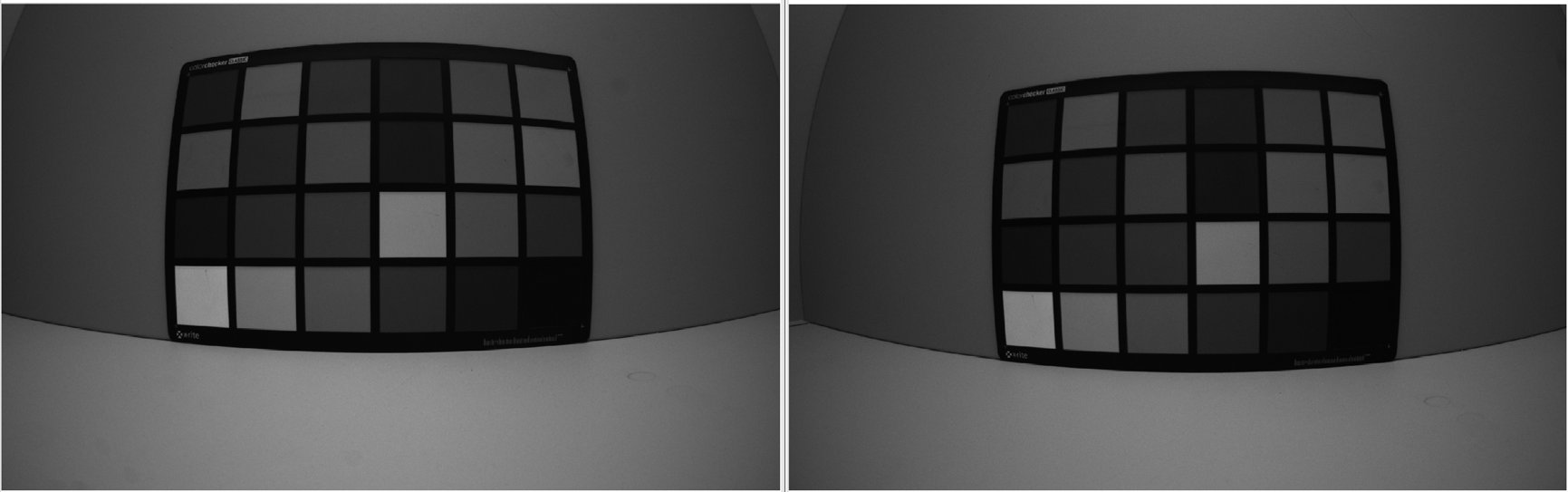
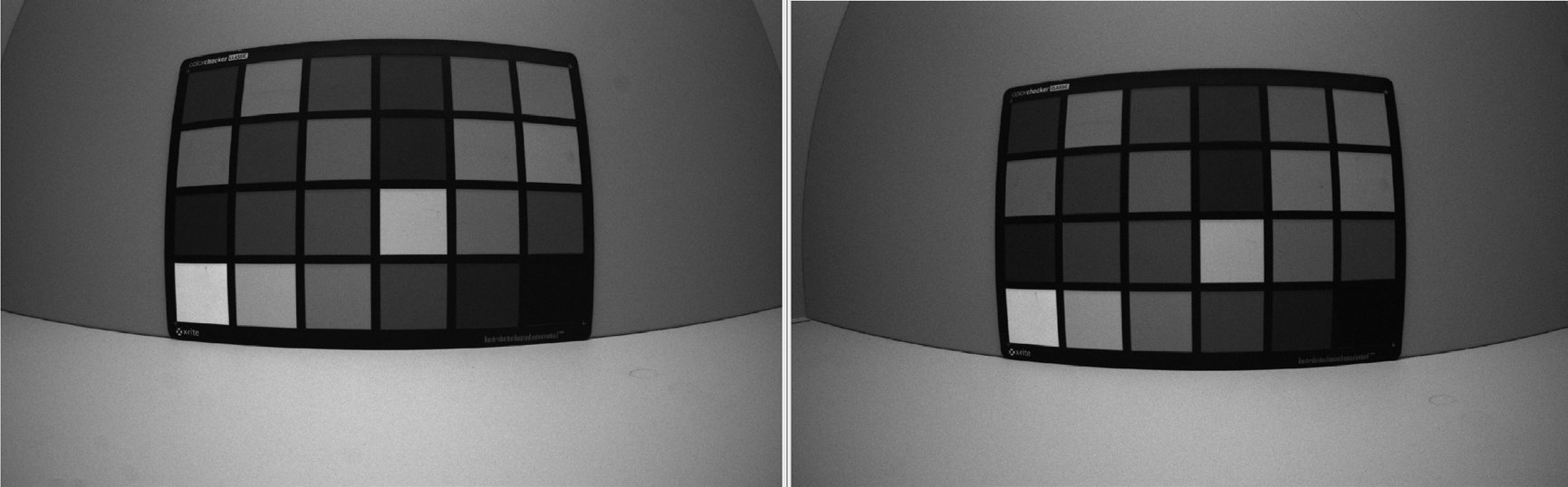
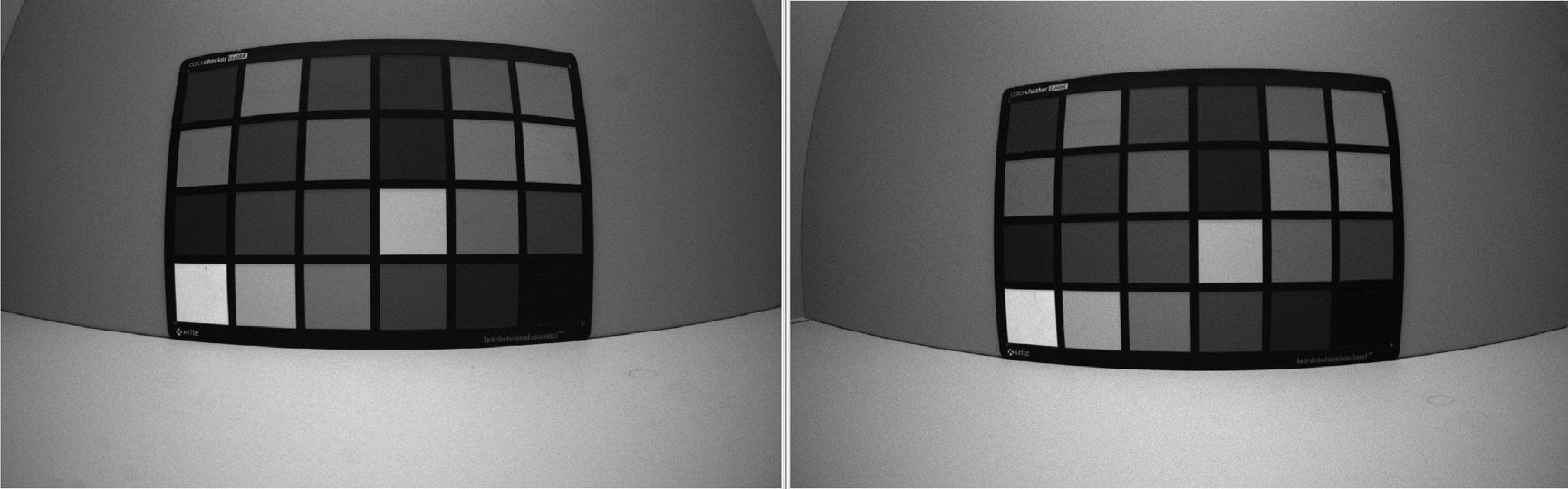
A 24-patch colour checker at 400, 150 and 50 lux. Exposure 8 ms, offset 64, defective pixel correction on, 25 °C. Each sensor is measured at equal analog gain, then again with digital gain added until the 21 grey patches reach 400 DN. The digital gain each sensor needs is in the table.
Same brightness
| GS2.3 SNR | SC233HGS SNR | GS2.3 digital gain | SC233HGS digital gain | |
|---|---|---|---|---|
| 400 lux, 1× | 34.6 dB | 31.9 dB | 1.01× | 1.12× |
| 150 lux, 2× | 31.0 dB | 28.2 dB | 1.45× | 1.60× |
| 50 lux, 8× | 26.3 dB | 23.7 dB | 1.06× | 1.18× |
SNR of the 21 grey patches, held at 400 DN. GS2.3 gets there with less digital gain, and digital gain amplifies noise along with the signal.
GS2.3 26.3 dB. SC233HGS 23.7 dB.
Equal analog gain
| GS2.3 | SC233HGS | ||
|---|---|---|---|
| 400 lux, 1× | #21 | 396 DN, 34.4 dB | 356 DN, 31.9 dB |
| #22 | 213 DN, 31.7 dB | 188 DN, 29.6 dB | |
| 150 lux, 2× | #21 | 277 DN, 31.0 dB | 249 DN, 28.2 dB |
| #22 | 150 DN, 28.7 dB | 131 DN, 25.4 dB | |
| 50 lux, 8× | #21 | 377 DN, 26.1 dB | 340 DN, 23.5 dB |
| #22 | 206 DN, 23.5 dB | 180 DN, 20.3 dB |
At equal gain the checker reads brighter on GS2.3, and quieter.
Brightness matched
| GS2.3 digital gain | GS2.3 #21 | GS2.3 #22 | SC233HGS digital gain | SC233HGS #21 | SC233HGS #22 | |
|---|---|---|---|---|---|---|
| 400 lux, 1× | 1.01× | 399 DN, 34.6 dB | 215 DN, 31.9 dB | 1.12× | 400 DN, 31.9 dB | 211 DN, 29.7 dB |
| 150 lux, 2× | 1.45× | 399 DN, 31.0 dB | 217 DN, 28.5 dB | 1.60× | 397 DN, 28.2 dB | 210 DN, 25.4 dB |
| 50 lux, 8× | 1.06× | 404 DN, 26.3 dB | 220 DN, 23.4 dB | 1.18× | 403 DN, 23.7 dB | 212 DN, 20.4 dB |
Infrared at 940 nm
Visible light blocked, infrared illumination on, 940 nm narrowband lens. Exposure 8 ms, offset 64, defective pixel correction on, 25 °C.
Equal analog gain
| GS2.3 | SC233HGS | ||
|---|---|---|---|
| 2× | #21 | 184 DN, 29.1 dB | 101 DN, 24.2 dB |
| #22 | 115 DN, 27.3 dB | 67 DN, 22.3 dB | |
| 4× | #21 | 357 DN, 29.2 dB | 204 DN, 24.1 dB |
| #22 | 222 DN, 26.9 dB | 135 DN, 22.3 dB |
At equal gain GS2.3 reads 184 DN where SC233HGS reads 101.
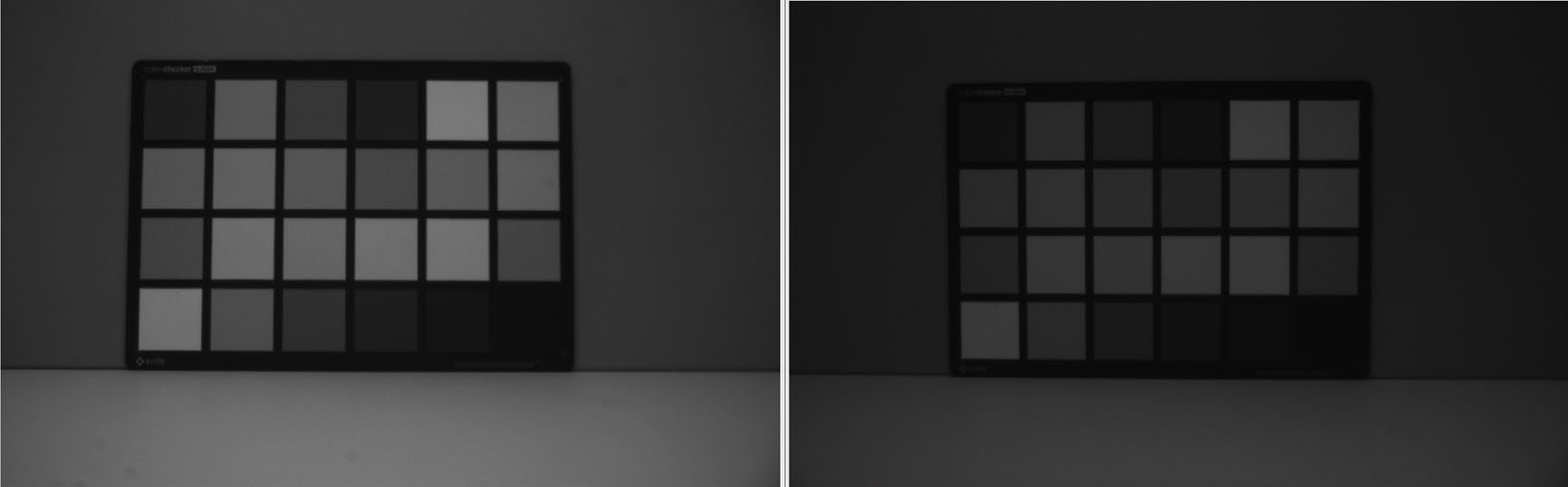
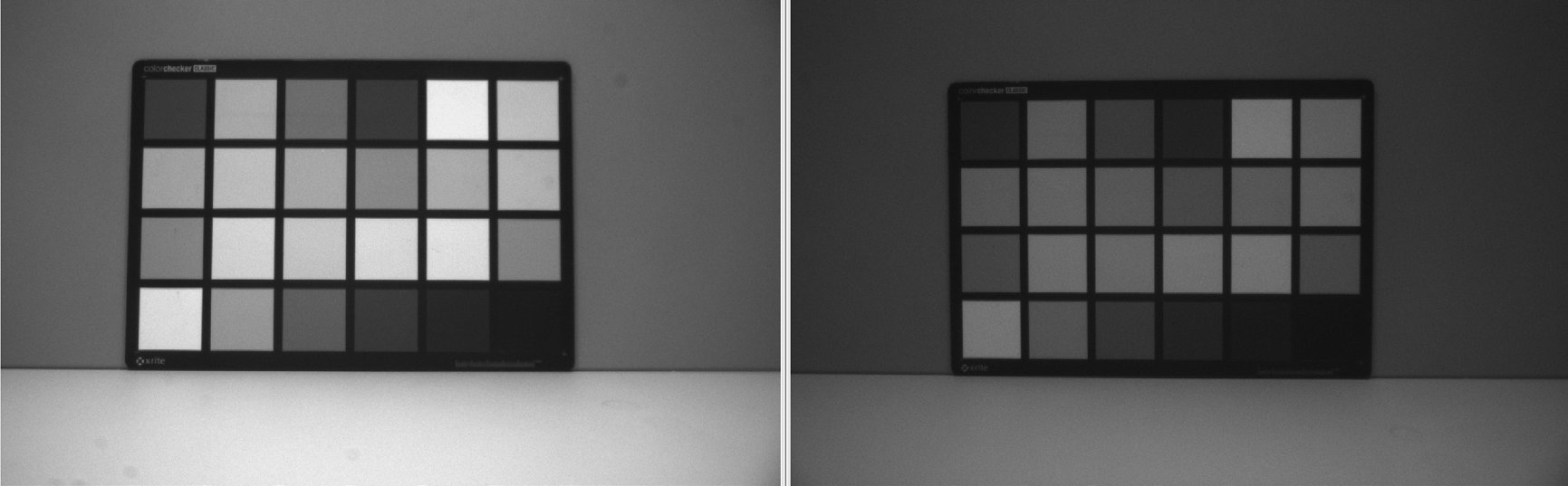
Same brightness
| GS2.3 digital gain | GS2.3 #21 | GS2.3 #22 | SC233HGS digital gain | SC233HGS #21 | SC233HGS #22 | |
|---|---|---|---|---|---|---|
| 2× | 2.04× | 399 DN, 29.1 dB | 250 DN, 27.3 dB | 3.95× | 401 DN, 24.2 dB | 264 DN, 22.4 dB |
| 4× | 1.04× | 399 DN, 29.1 dB | 249 DN, 27.1 dB | 1.85× | 399 DN, 24.0 dB | 265 DN, 22.0 dB |
Matching the brightness costs SC233HGS 3.95× of digital gain against 2.04×, and the extra gain raises the noise floor.
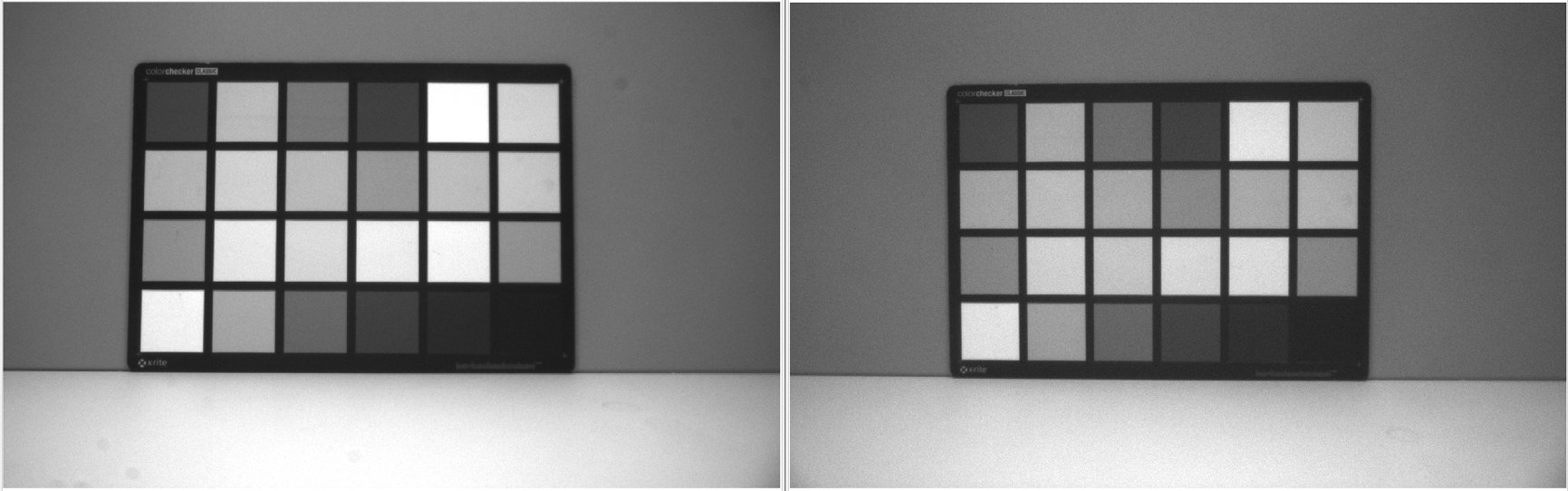
GS2.3 29.1 dB. SC233HGS 24.0 dB.
Gray card, 25 to 80 °C
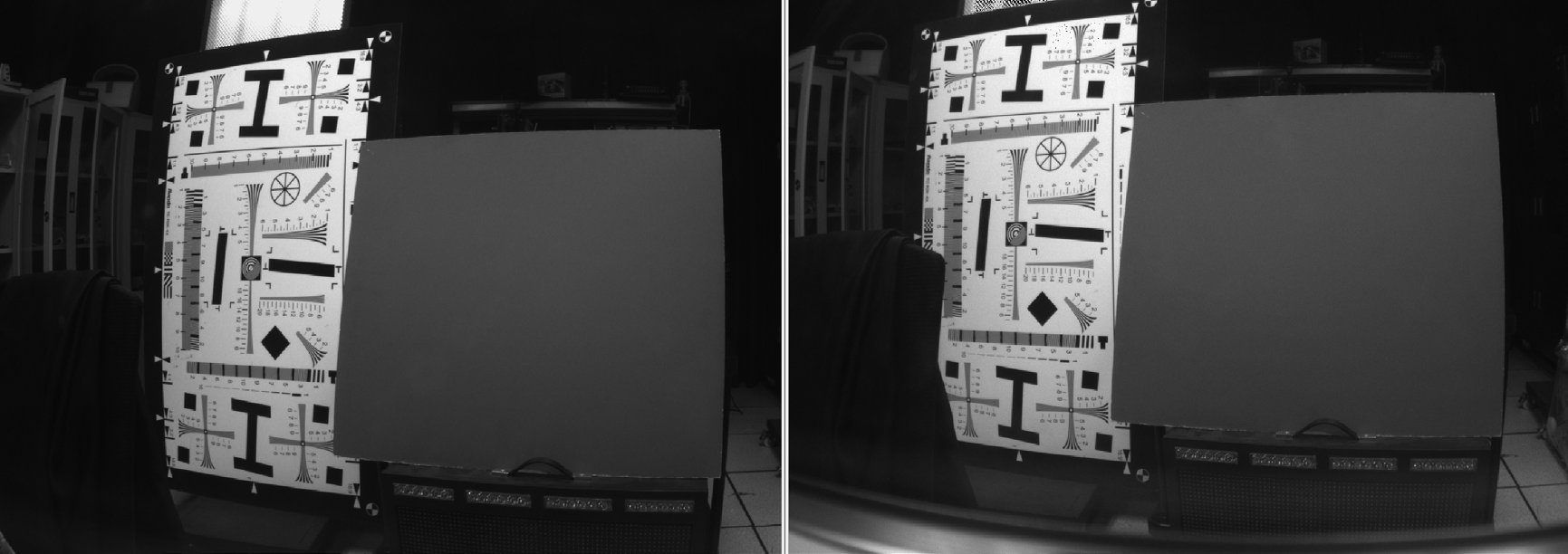
A gray card in a real scene at 850 and 20 lux, at 25, 60 and 80 °C. Exposure 5 ms at 850 lux, 8 ms at 20 lux. Defective pixel correction on. Brightness is matched across the two sensors with digital gain; the gain used is in the table.
SNR
| GS2.3 SNR | SC233HGS SNR | GS2.3 digital gain | SC233HGS digital gain | |
|---|---|---|---|---|
| 850 lux, 25 °C, 1× | 33.9 dB | 30.7 dB | 1.00× | 1.20× |
| 850 lux, 60 °C, 1× | 34.9 dB | 32.0 dB | 1.00× | 1.00× |
| 850 lux, 80 °C, 1× | 35.1 dB | 32.0 dB | 1.00× | 1.00× |
| 20 lux, 25 °C, 8× | 21.7 dB | 17.5 dB | 1.00× | 1.22× |
| 20 lux, 60 °C, 8× | 21.3 dB | 17.7 dB | 2.00× | 2.28× |
| 20 lux, 80 °C, 8× | 18.8 dB | 16.5 dB | 2.00× | 2.25× |
Fixed-pattern noise and shading
| GS2.3 FPN | SC233HGS FPN | GS2.3 shading, pixel | SC233HGS shading, pixel | |
|---|---|---|---|---|
| 850 lux, 25 °C, 1× | 16.61 DN | 31.24 DN | 5.17 DN | 7.78 DN |
| 850 lux, 60 °C, 1× | 16.80 DN | 21.59 DN | 5.63 DN | 7.60 DN |
| 850 lux, 80 °C, 1× | 14.74 DN | 34.00 DN | 5.85 DN | 8.77 DN |
| 20 lux, 25 °C, 8× | 21.14 DN | 18.44 DN | 10.53 DN | 17.03 DN |
| 20 lux, 60 °C, 8× | 46.93 DN | 44.73 DN | 21.50 DN | 32.47 DN |
| 20 lux, 80 °C, 8× | 35.69 DN | 60.98 DN | 24.66 DN | 32.26 DN |
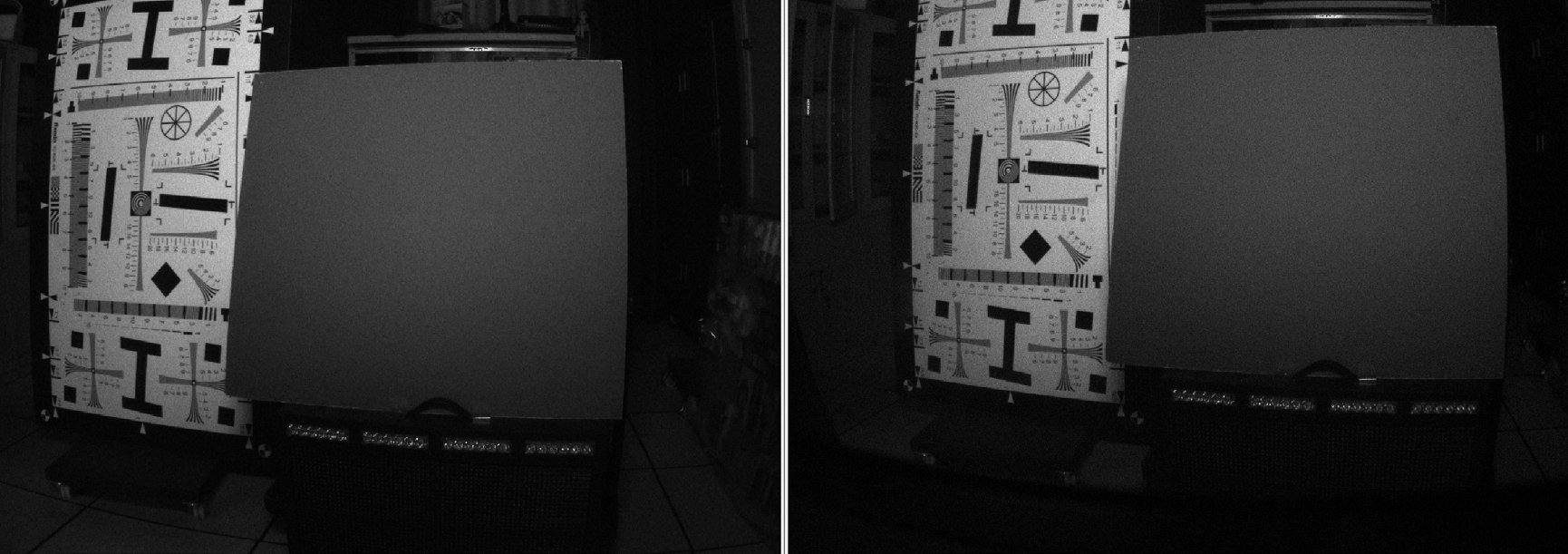
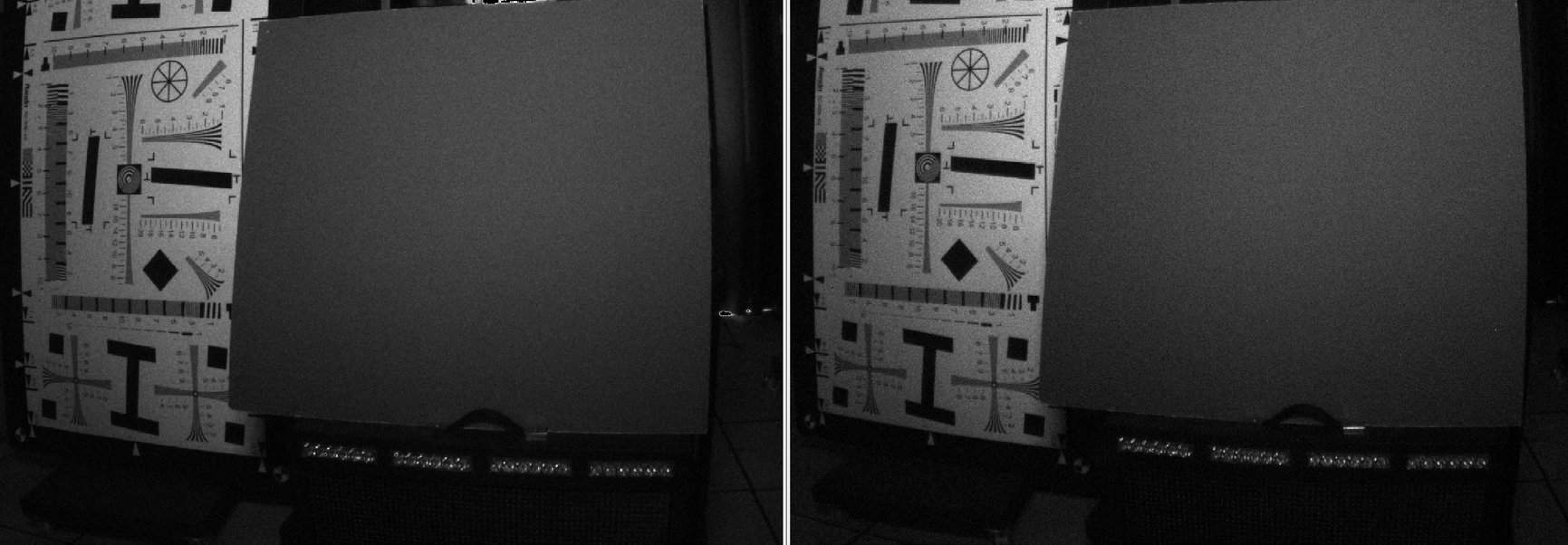
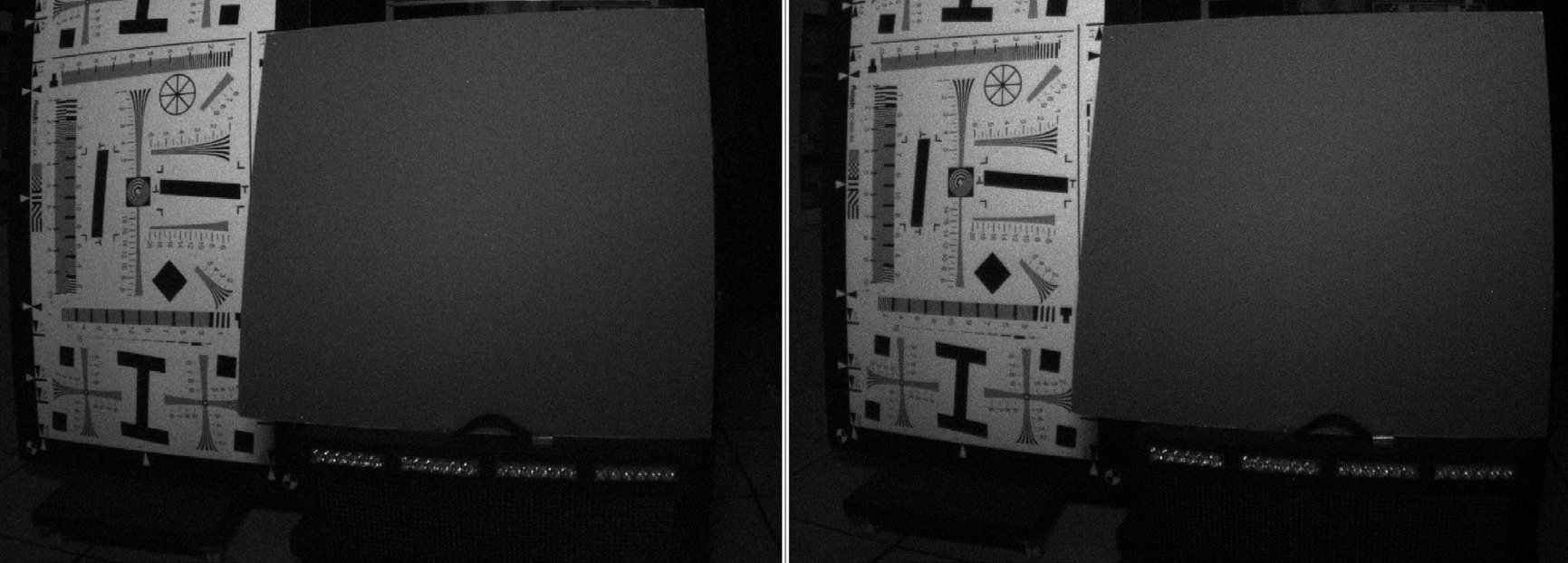
DN at 10-bit. Row and column shading terms stay under 1 DN on both sensors. SC233HGS shows less fixed-pattern noise at 20 lux, 25 and 60 °C. At 80 °C the order reverses: 35.69 DN against 60.98.
White points in the dark
Dark, analog gain 4×, defective pixel correction on. A white point is a pixel brighter than the frame average plus the threshold.
| Threshold | GS2.3 white points | SC233HGS white points | |
|---|---|---|---|
| 60 °C, dark, 4× | +60 DN | 0 | 7 |
| 80 °C, dark, 4× | +150 DN | 8 | 13 |
Fewer white points, less work for the correction block downstream.
Power
25 °C, analog gain 1×, exposure 8 ms, dark, defective pixel correction on.
| GS2.3 | SC233HGS | |
|---|---|---|
| AVDD, 2.8 V | 20.7 mA | 24.2 mA |
| IOVDD, 1.8 V | 5.2 mA | 0.8 mA |
| DVDD, 1.5 V | 168.9 mA | 143.6 mA |
| Total power | 320.7 mW | 284.6 mW |
SC233HGS draws less power overall. That is the row it wins.
Method
All measurements are ours, run on our bench on engineering samples of both parts. Defective pixel correction was on in every test. Offset 64. Exposure 8 ms unless the table says otherwise. The colour tests use the same routine lens. The infrared test uses a 940 nm narrowband lens. Where brightness is matched, digital gain does the matching, and the gain is printed in the table.
The full specification is in the short datasheet. The specification page sets these numbers against the other global shutters in the class.